

Navigating cross cultural engagement and marriage with a slavic women after dating demands sensitivity, cultural awareness, and a willingness to reconcile tradition with personal values. In this post, we examine how Ukrainian rules of engagement customs function, historically and in modern times, and offer a practical roadmap for couples who want to respect cultural heritage while building a lasting, cross-cultural commitment.
Understanding Ukrainian Engagement Traditions
Ukrainian engagement traditions carry symbolic weight beyond a Western “pop the question” format. The historical rules of engagement ritual, Zaruchyny, involved a formal agreement between families rather than simply a romantic gesture from the couple. During Zaruchyny, the couple’s hands were placed together over bread and grain, symbolizing unity and the promise to marry, witnessed and blessed by family and friends.
While many of these rituals have faded under modern pressures, their symbolism lingers. In contemporary Ukraine, cross cultural engagement often blends modern and traditional elements: a ring exchange, family discussions, and sometimes a small domestic gathering. However, for many couples, particularly in urban settings, the traditional act of “asking parents for permission” is no longer seen as mandatory.
What is cultural engagement? Because of this blend of old and new, when planning an engagement with a Ukrainian woman, it helps to understand not only what remains traditional but also how modern Ukrainians interpret commitment, marriage, and symbolism.
Choosing the Right Ring
One of the most visible tokens of engagement definition is the ring itself, and in Ukraine, ring customs differ from many Western norms:
- Wedding rings are typically worn on the right hand rather than the left.
- Ukrainian engagement rings are often placed on the left hand initially; after the wedding ceremony, the wedding ring may go on the right hand, or both rings may be stacked on the same finger, depending on preference and regional or family tradition.
When selecting a ring, it’s thoughtful to consider:
- The cultural significance of right-hand ring wearing.
- Her personal style and whether she favors classic / traditional looks (which may resonate more) or modern / Western aesthetics.
- Whether she values symbolism or sees the ring primarily as a fashion/accessory item – some Ukrainian women view the engagement ring as largely symbolic, given many also sign a legal contract (see next sections).
A well-chosen ring shows you appreciate and respect the cultural context, but only meaningful when paired with clear communication about what the ring represents to both of you.
How to Plan the Proposal
How to propose engagement to a woman? Since many Ukrainian couples mix modern romantic proposals with cultural sensibilities, planning a proposal requires both thoughtfulness and flexibility. Here are recommendations based on observed behaviors in intercultural couples and psychological research on romantic commitment:
- Know her background — urban vs rural family, traditional vs modern upbringing. Her upbringing may influence how she views engagement and marriage.
- Frame the proposal as a shared decision — treat it as the start of a conversation about long-term plans, rather than a once-off “surprise.”
- Involve family if it feels natural — some women appreciate having relatives aware or present; for others, a private moment is preferred.
- Be culturally respectful with symbolic elements — consider small nods to Ukrainian tradition (e.g., symbolic bread, family blessing) if you know they are meaningful to her.
- Clarify legal and practical implications — given that many couples in Ukraine supplement engagement with a formal contract.
Since you may come from different cultural expectations, clarity and sensitivity will help both of you build a foundation rooted in understanding. Indeed, recent cross-cultural psychology research suggests that couples who openly negotiate commitments and expectations (rather than leave them implicit) tend to develop stronger “dyadic cultural affinity,” even when backgrounds differ.
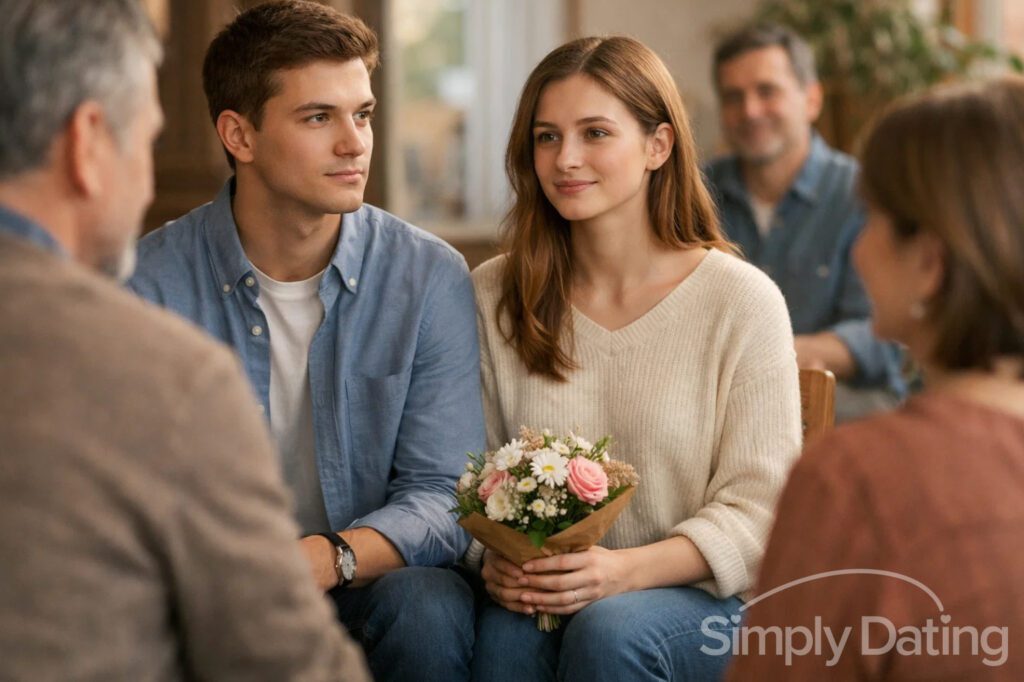
Gaining Her Family’s Blessing
Though not strictly required everywhere today, seeking some level of family blessing or at least informing her family about your intentions remains a meaningful gesture, especially if she comes from a more traditional or family-oriented background. In older Ukrainian engagement traditions, the engagement (Zaruchyny) was as much about families uniting as about the couple themselves.
Polite practices may include:
- Meeting with her parents (or one parent), bringing a respectful gift (flowers, a small symbolic present).
- Expressing your intentions: seriousness, respect for her culture and future.
- Asking for their blessing — presenting it as a sign of respect, not obligation.
If her family insists on more traditional rituals (e.g., symbolic bread, embroidered cloth, or even a simplified version of Zaruchyny), being open to participating can strengthen trust and signal respect for heritage. If not, that’s fine too; what matters most is transparency and respectful communication.
Celebrating the Engagement
In modern Ukraine, celebrations around engagement or weddings have become variable, from small intimate gatherings to larger parties depending on the couple, their social circle, and financial means. Still, some traditional elements may be retained:
- The old ritual of the ceremonial cloth (embroidered towel or “rushnyk”), historically used during marriage ceremonies when the couple stepped on it as a symbol of joint path ahead.
- The use of the ceremonial bread, Korovai, traditionally used in weddings as a symbol of prosperity, unity, and communal blessing.
- Blessings from parents and elder family members (“blagoslovennia”) in certain communities.
However, many urban couples may opt for a more modern celebration, dinner, a nice ring dinner, or a modest get-together. The key is to discuss her expectations (and her family’s) ahead of time, don’t assume traditional rituals will or won’t matter.
Common Misconceptions About Ukrainian Engagements
Some Westerners assume that Ukrainian engagement automatically involves traditional folk rituals, but modern reality is more nuanced. Here are common misconceptions, and what evidence suggests instead:
- Misconception: Every Ukrainian engagement involves Zaruchyny, gift exchanges, and family ritual.
- Reality: Many modern couples treat engagement as a personal decision, often without traditional rituals or family involvement. The modernization of marital behavior in Ukraine (delaying marriage age, increased cohabitation, fewer early marriages) reduces the prevalence of such customs.
- Reality: Many modern couples treat engagement as a personal decision, often without traditional rituals or family involvement. The modernization of marital behavior in Ukraine (delaying marriage age, increased cohabitation, fewer early marriages) reduces the prevalence of such customs.
- Misconception: Ring must be worn on the left hand, like in U.S./Western practice.
- Reality: Tradition often prescribes the right hand for wedding bands; Ukrainian engagement rings may follow Western norms but often adapt to local traditions.
- Reality: Tradition often prescribes the right hand for wedding bands; Ukrainian engagement rings may follow Western norms but often adapt to local traditions.
- Misconception: Family must “bless” the engagement or give permission.
- Reality: For many contemporary couples, especially in cities, such formal parental consent is optional; the decision is more likely made by the couple themselves.
Understanding these nuances will help you approach the process with respect and avoid stereotyping or over-assuming.
How to Handle Long-Distance Proposals
Given the ongoing demographic, and sometimes geopolitical, situation in Ukraine (migration, displacement, diaspora), many Ukrainian couples today are long-distance. That influences how engagements may happen:
- Recently, online/remote marriages and civil registrations have become more common.
- Proposals and engagements may happen via long-distance video calls, with ring sending by mail, or planning engagement while physically apart.
If you find yourself in such a situation:
- Communicate clearly about intentions, timeline, and expectations.
- Discuss legal/practical complications (residency, legal documents, property contracts, future co-habitation).
- Consider a delayed in-person celebration or symbolic ceremony when you reunite, to honor tradition and relationship meaning.
Long-distance doesn’t have to diminish the engagement; it can instead test commitment, trust, and flexibility early on.

Advice for a Lasting Commitment
Entering a cultural engagement is just the start, long-term success depends on shared values, communication, and mutual respect. In a cross-cultural context (Ukrainian and foreign), these factors become even more important. Drawing on large-scale psychological research and demographic data, here are evidence-based guidelines for nurturing a lasting commitment:
- In a recent cross-cultural dataset covering 175 countries and more than 117,000 participants, couples across cultures reported that committed love (not just passionate or romantic love), tied to shared values, respect, and stability, predicted higher relationship quality.
- For intercultural couples, adaptive conflict communication, avoiding rigid cultural expectations and negotiating roles and traditions together, leads to stronger long-term relational satisfaction and even a shared “cultural affinity” as a couple.
- Given demographic shifts in Ukraine, rising first-marriage ages, increasing economic instability, rising use of formal prenuptial or marriage contracts, many young Ukrainians view marriage as both emotional and pragmatic.
Thus, success as a couple will depend not only on romance and tradition, but on openness, negotiation, and shared planning.
Final Thoughts
Having an engagement woman is not about performing a “folk ritual,” it’s about honoring her personal and cultural identity while forging a shared path forward. Understanding Ukrainian engagement traditions (like Zaruchyny, right-hand ring wearing, ceremonial bread, symbolic rituals) gives you cultural grounding. But equally important is blending those traditions with honest communication, mutual respect, and adaptive planning.
Whether your engagement is across continents or in the same city, traditional or modern, the goal remains the same: to build a foundation of trust, shared values, and understanding. If you approach the process thoughtfully, with respect for heritage and clarity for the future, your union can reflect both where she comes from and where you both want to go together.
How do traditional Ukrainian engagements differ from Western proposals?
Historically, cultural engagement centered on Zaruchyny. a formal, family-mediated agreement rather than a purely romantic moment. Families gathered, symbolic bread and grain were used, and both sides publicly affirmed the intention to marry.
Do Ukrainians still practice Zaruchyny today?
Not commonly. Modern engagements rarely involve the full ritual, although symbolic elements (family gathering, blessing, bread) may appear in more traditional households. Most couples now treat engagement as a personal decision, occasionally followed by a modest celebration.
Which hand do Ukrainian women wear engagement and wedding rings on?
Tradition places the wedding ring on the right hand, not the left.
Common modern patterns include:
- Engagement ring on the left → wedding ring on the right
- Both rings worn together on the right after the wedding
- A blended approach depending on family customs and personal preference
When choosing a ring, consider her taste, tradition, and how she interprets the symbolism.
What cultural considerations matter when planning a proposal?
To avoid misunderstandings and create a respectful experience:
- Know her background, traditional vs. modern, rural vs. urban
- Treat the proposal as a conversation, not a one-sided event
- Decide whether to involve family, depending on her comfort
- Blend traditions thoughtfully, such as incorporating symbolic bread or a simple blessing
- Discuss the practical side, including legal and logistical factors (common in Ukraine’s marriage culture)
Cross-cultural couples who openly negotiate expectations tend to create a stronger shared identity and fewer long-term conflicts.
Do I need to ask her parents for permission?
Not necessarily. In many modern Ukrainian families, formal “permission” is optional. However, informing or seeking blessing is still seen as respectful, especially if she comes from a family-oriented or traditional background. Bringing flowers, expressing sincere intentions, and showing cultural respect can go a long way. If her family prefers a symbolic mini-ritual, participating can build trust.










Commenting rules
Members comments are welcome and we encourage comments and discussions.
We ask that you put some thought in to your posts and that you follow these commenting rules and guidelines:
Failure to comply with these rules may result in your comment not being published.